Art portfolio examples
A good art portfolio doesn't show everything you've made. It shows a body of work, well photographed, in an order that makes sense, with enough information that a gallery, a buyer or an admissions panel can take the next step.
Art portfolios, 8 ways.
Layouts made for art, each shown with a full portfolio of work. Open one and click around; every one is a live site.
-
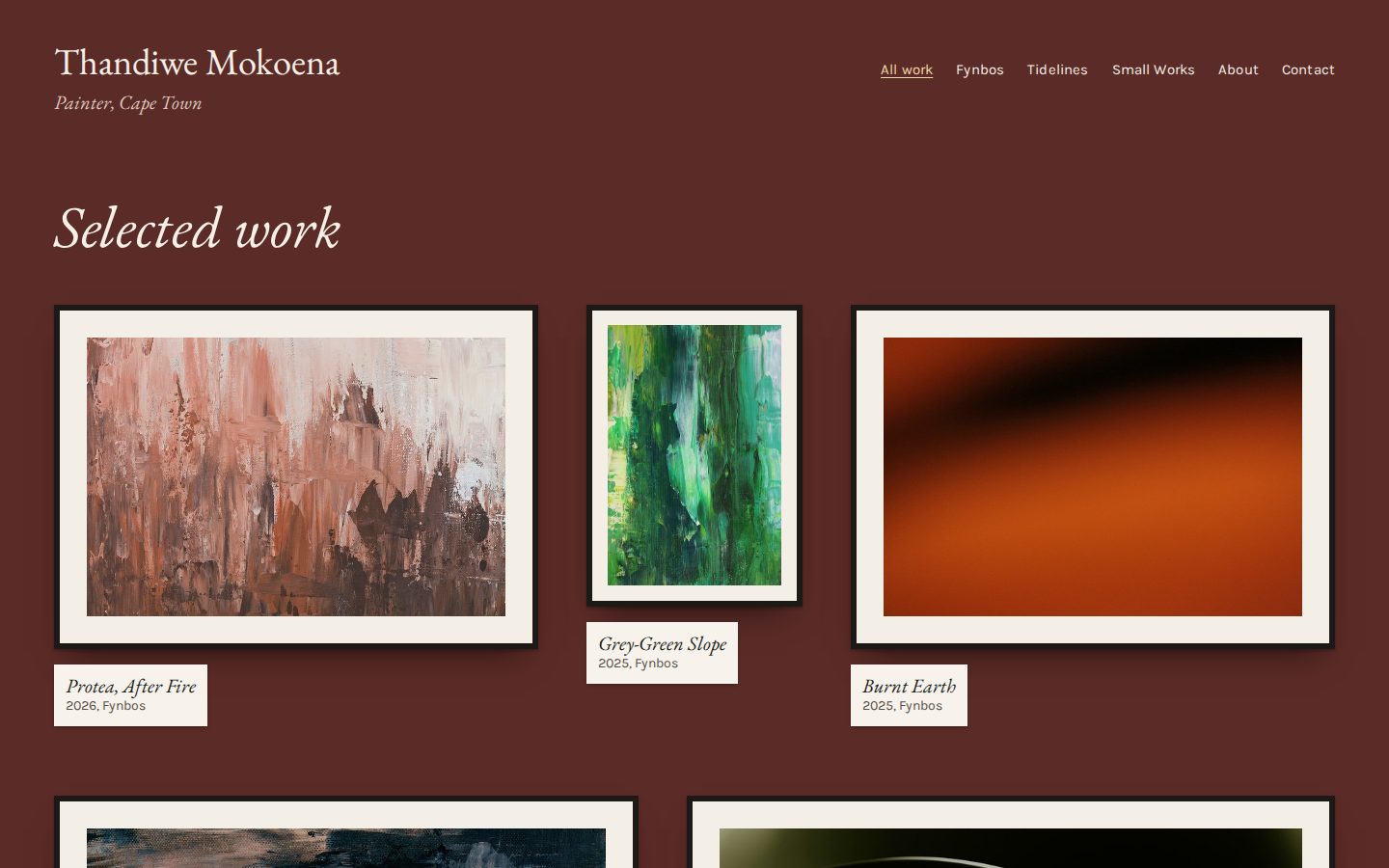
For painting, fine art
Your work hung on a gallery wall.
-
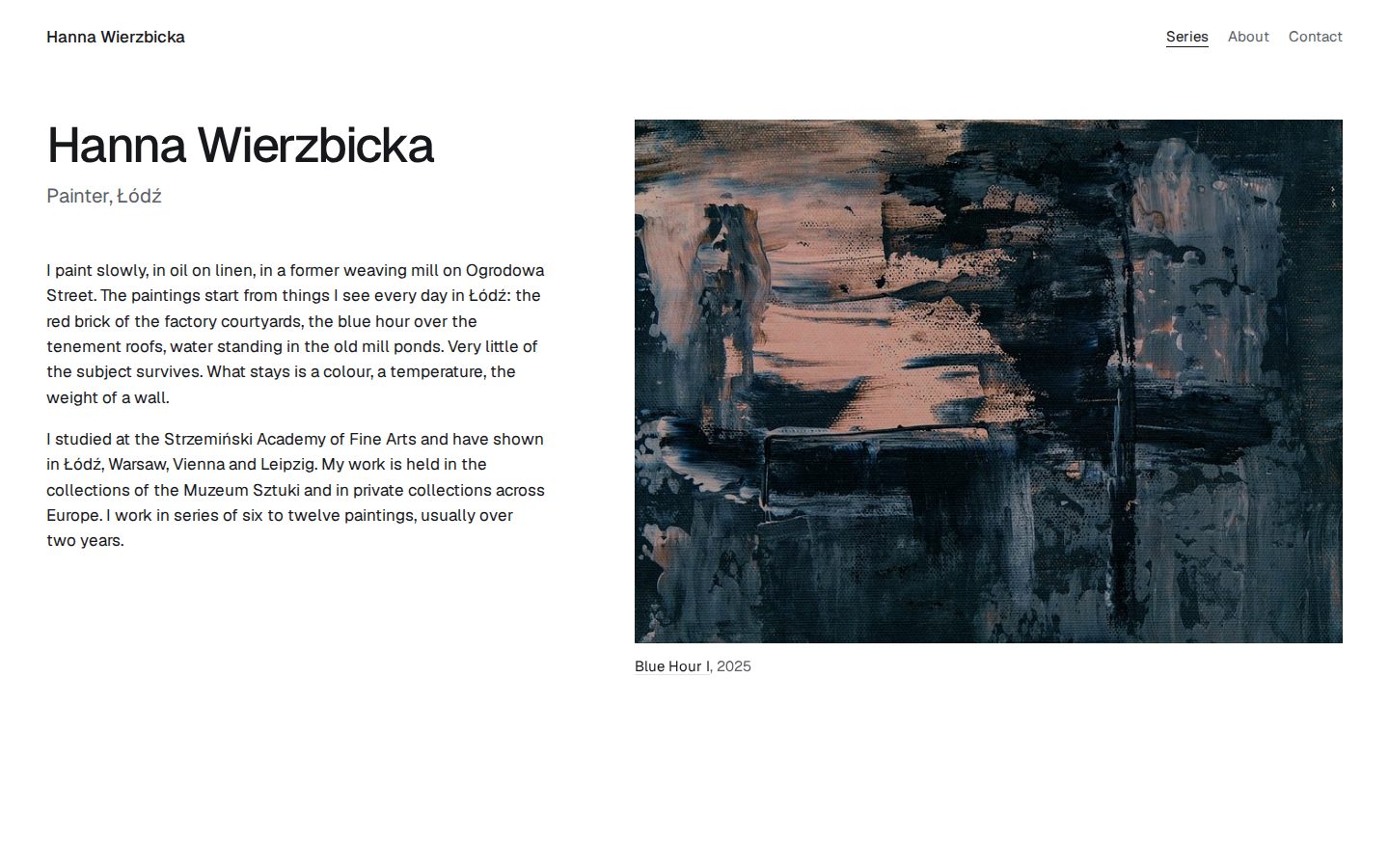
Caption
For painting, sculpture, fine art
Each piece large, with its title, medium and size set beside it.
-
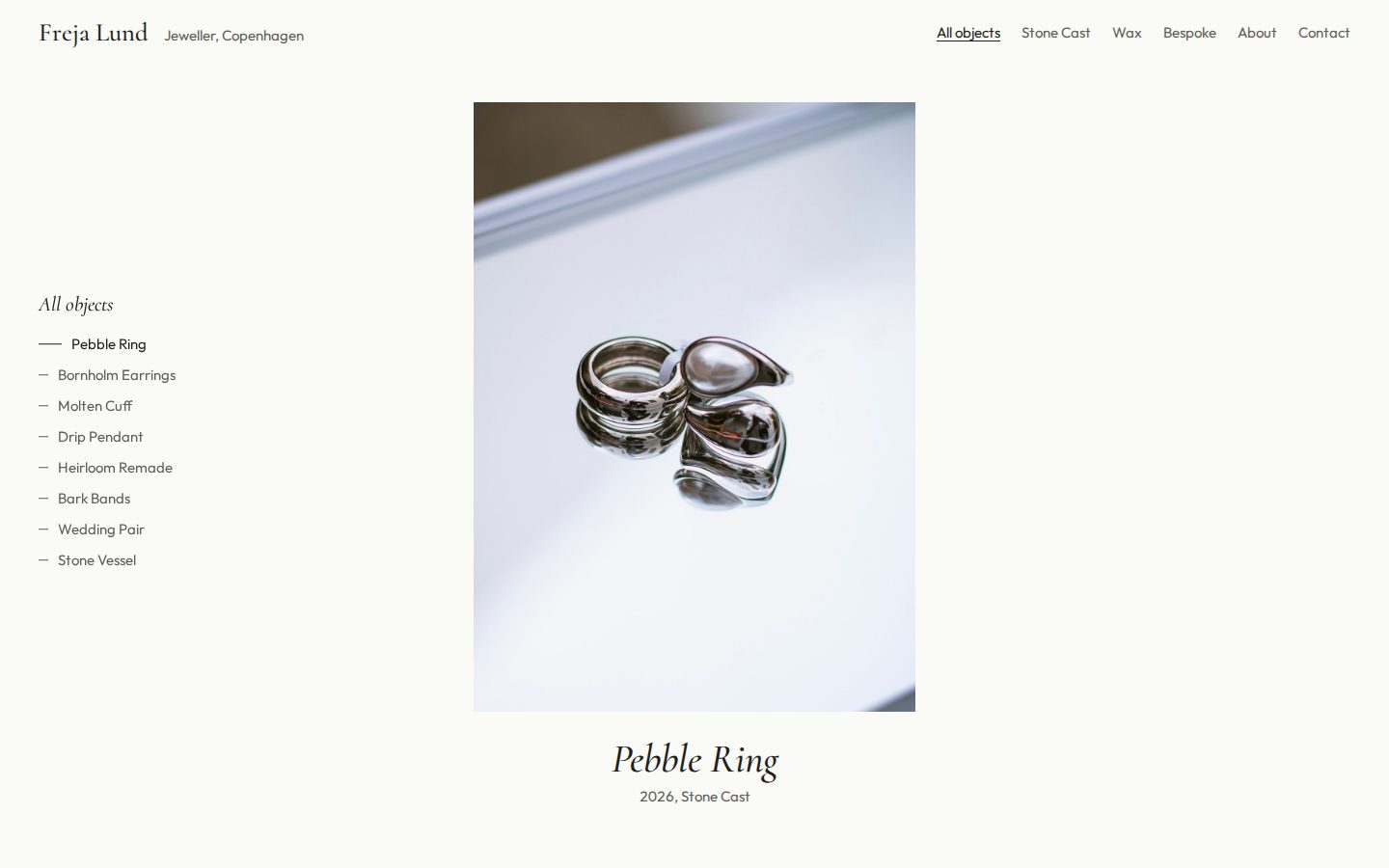
Vitrine
For objects, sculpture
One object per screen, with a lot of space around it.
-
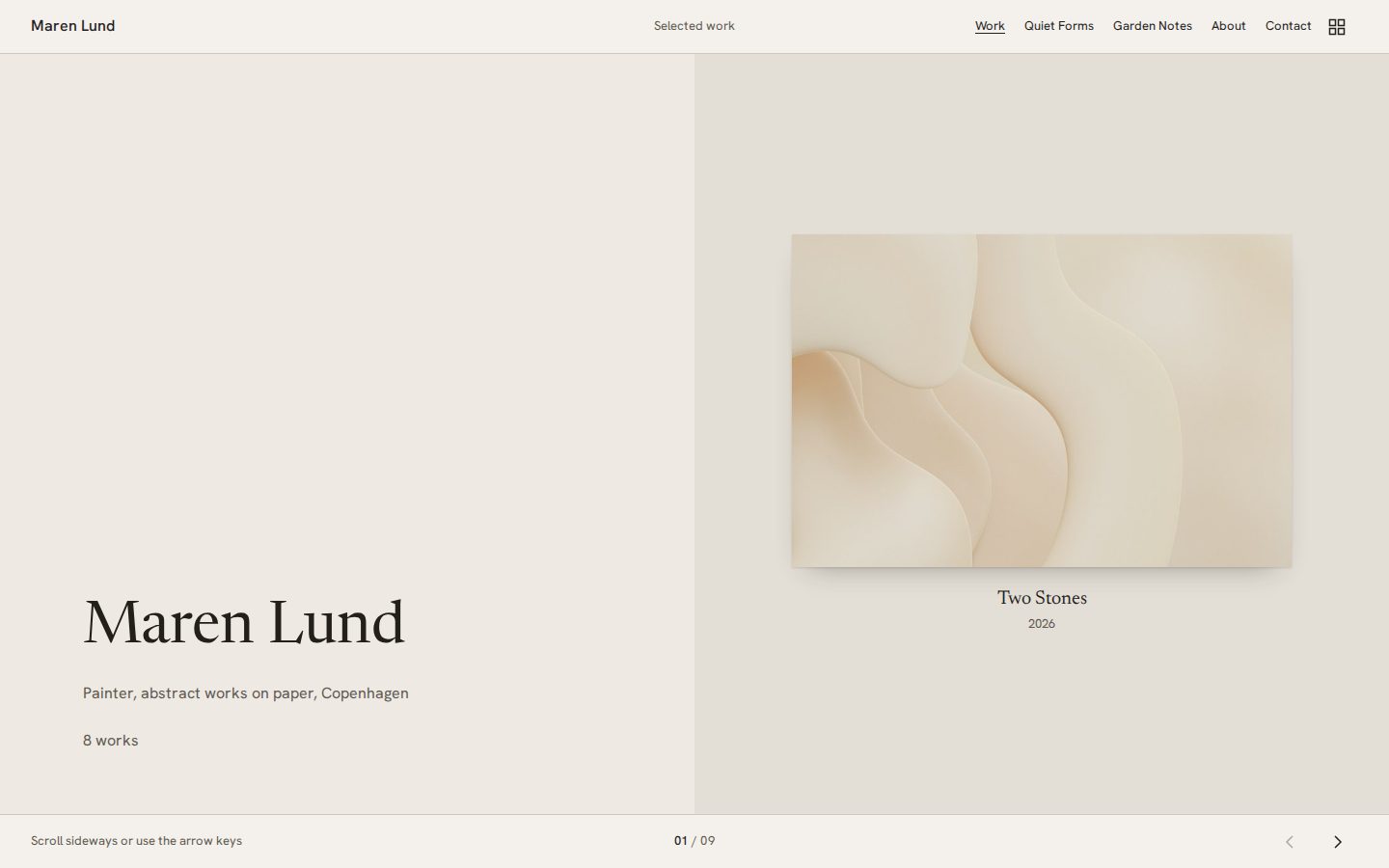
Panels
For painters, fine art
Half-screen panels you move through sideways, one work in each.
-
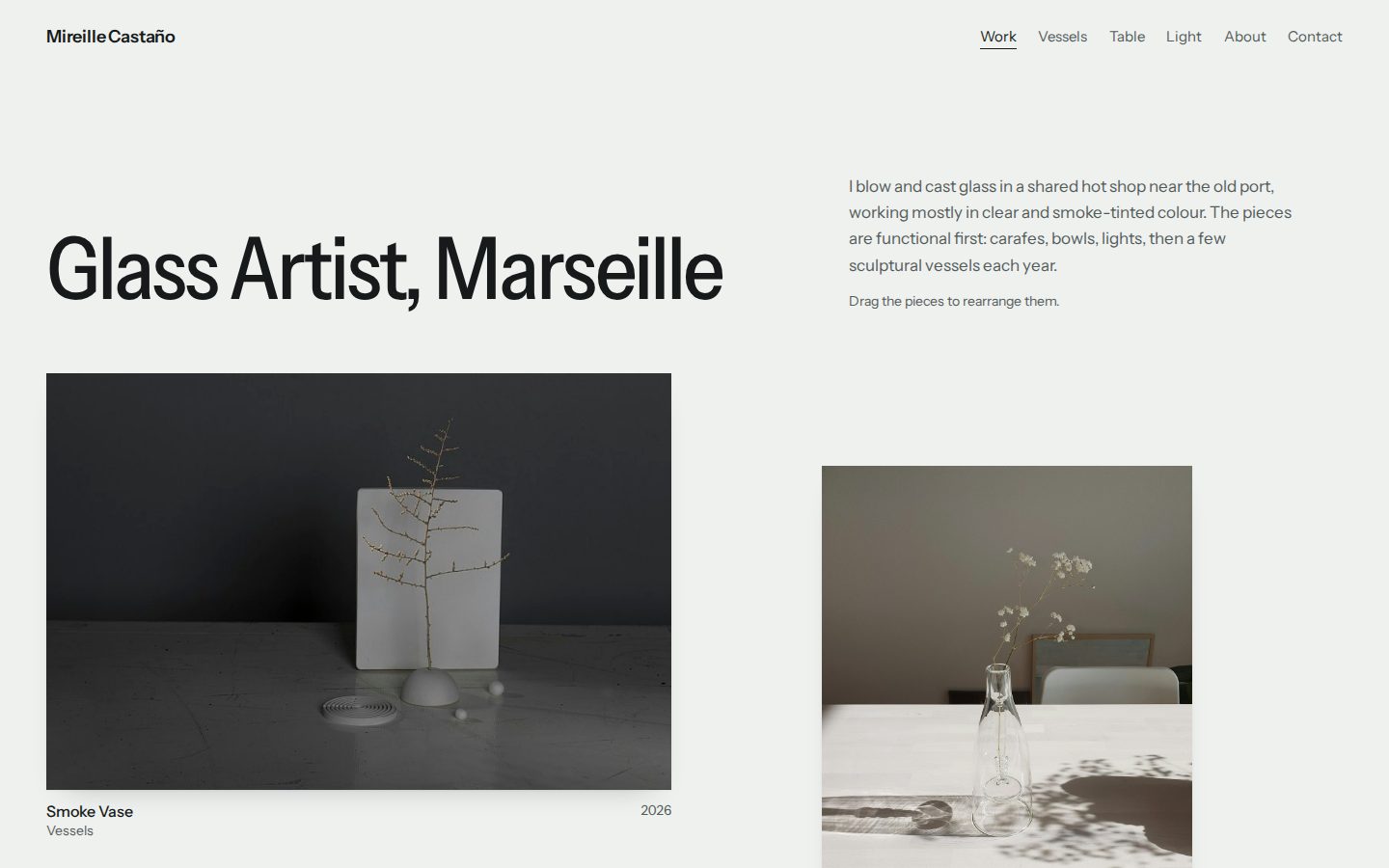
Drift
For mixed media, illustration, design
A composed, loosely scattered layout that still reads in order.
-
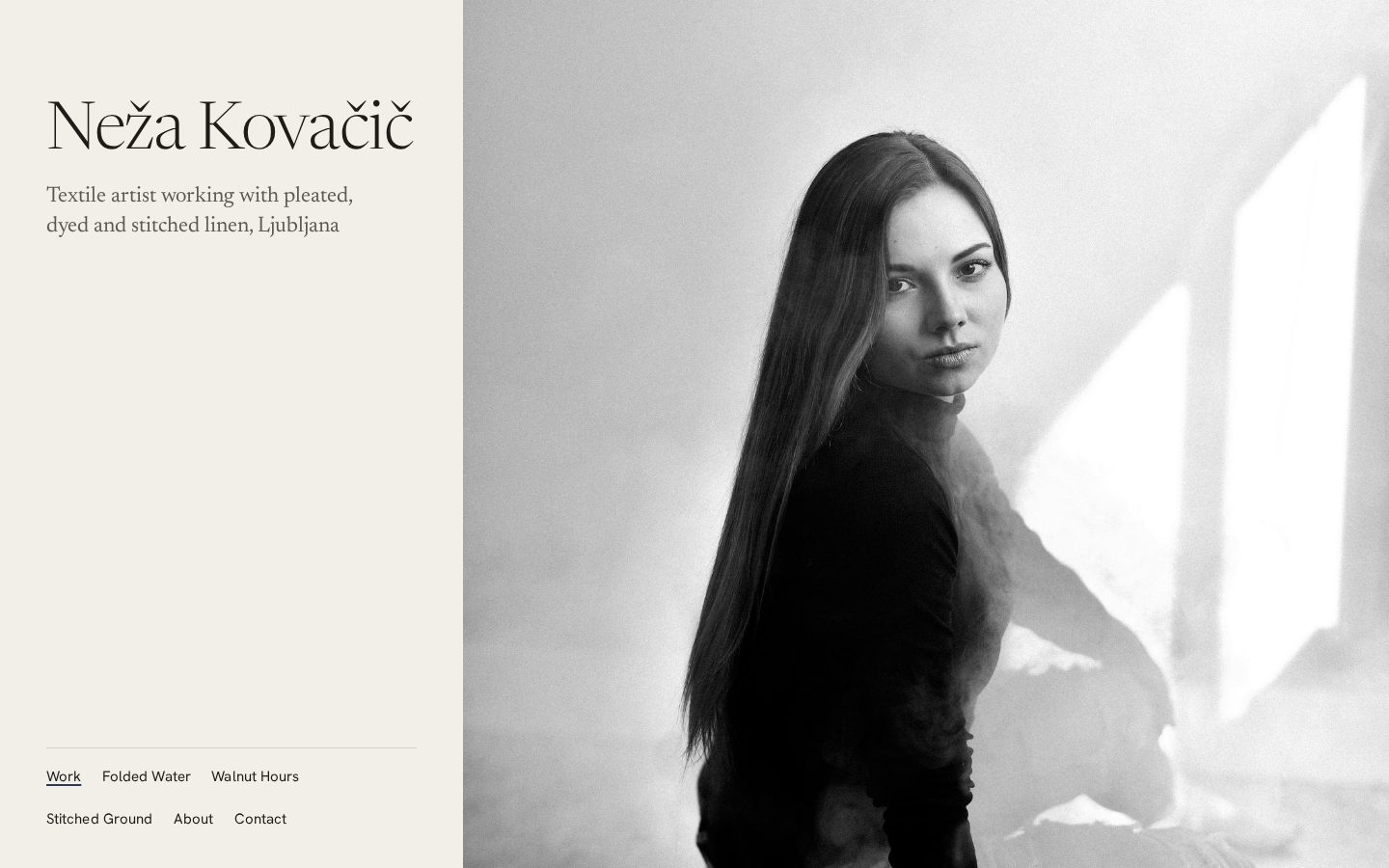
Portrait
For makers, textile and fine artists
You on the first screen, your selected work right after.
-
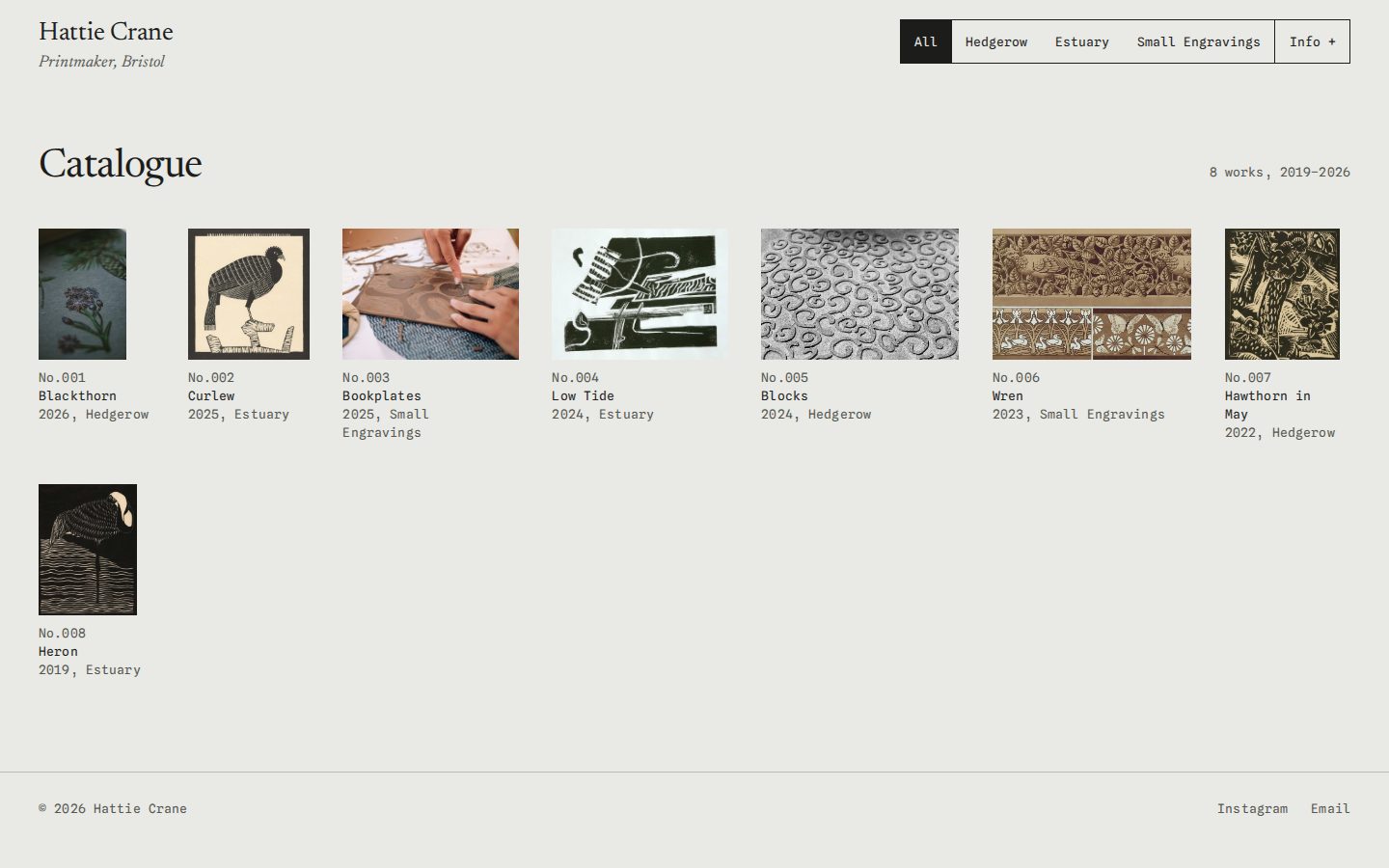
Archive
For collectors, publishers, many small works
A dense catalogue wall that keeps every piece at its relative size.
-
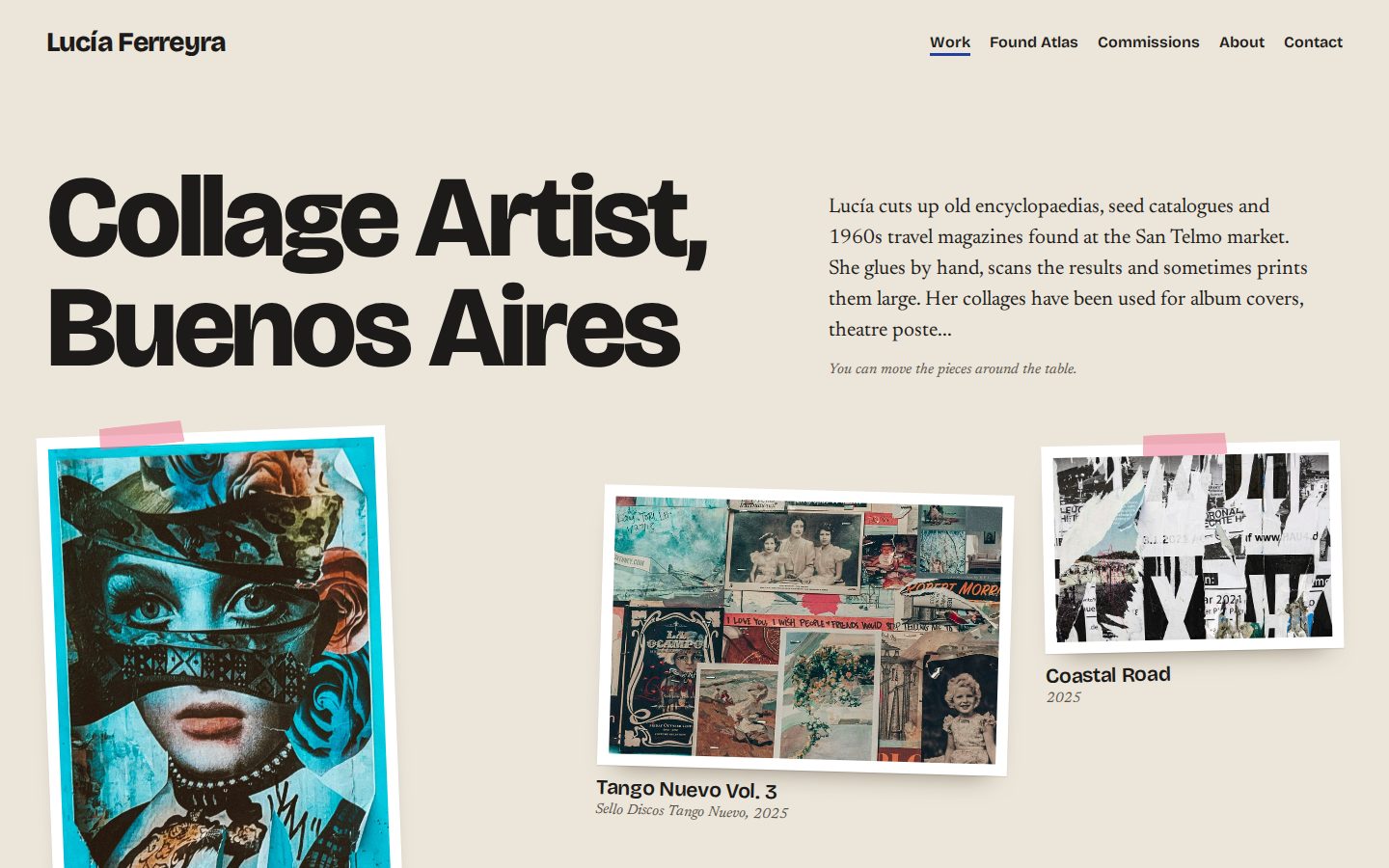
Collage
For mixed media, experimental
A pile of images visitors can drag around.
How to make a good art portfolio.
Five things the best ones have in common, whichever platform you build on. More on our artist portfolio website builder.
(01) Choose a body of work, not a history
Pick 10 to 20 pieces that belong together, most recent and strongest first. Older or different work can go in its own series further down, or stay off the site.
(02) Photograph it properly
Even, indirect light, the camera square to the work, colours checked against the original, and the frame or wall cropped away. It matters more than any design choice.
(03) Give every piece a label
Title, year, medium and size, the way a gallery wall label does. Buyers and curators look for it, and search engines read it.
(04) Group work into series
Series show that you work with intent. Give each one a short statement of two or three sentences instead of one long artist statement for everything.
(05) Make the next step obvious
A short bio, your CV or exhibition list, and a way to get in touch or ask about availability. Add your gallery if you have one.
Photographing physical work? Read how to photograph your artwork with a phone.
Free for up to 12 works. Every theme included.
About art portfolios
What is an art portfolio?
A selection of your artworks, photographed and presented so that a school, a gallery or a buyer can judge your work and decide what to do next. It can be a website, a PDF or a physical folder of prints, and many artists need all three.
What should I include in an art portfolio?
Ten to twenty of your strongest recent pieces, each with its title, year, medium and size, a short statement about your work, a brief bio or CV, and a way to get in touch. For school applications, add a few sketchbook pages that show how you work.
How do I make an art portfolio for college?
Read each school's guidelines first, since the number of pieces and formats vary. Include observational drawing, a few different media, and at least one idea you've developed over several pieces. Show process as well as finished work, and make sure everything is your own idea.
How do I make a digital art portfolio?
Export each piece at high resolution, group work by series or by client, and add a line of context to each. Show a few pieces in use, as a cover, a print or a game screen, so viewers can picture your work on their project.
How should I photograph my artwork for a portfolio?
In soft daylight from a big window, with the camera square to the work and the edges cropped away. Check the colours against the real piece before you upload. A phone is enough if the light and angle are right.