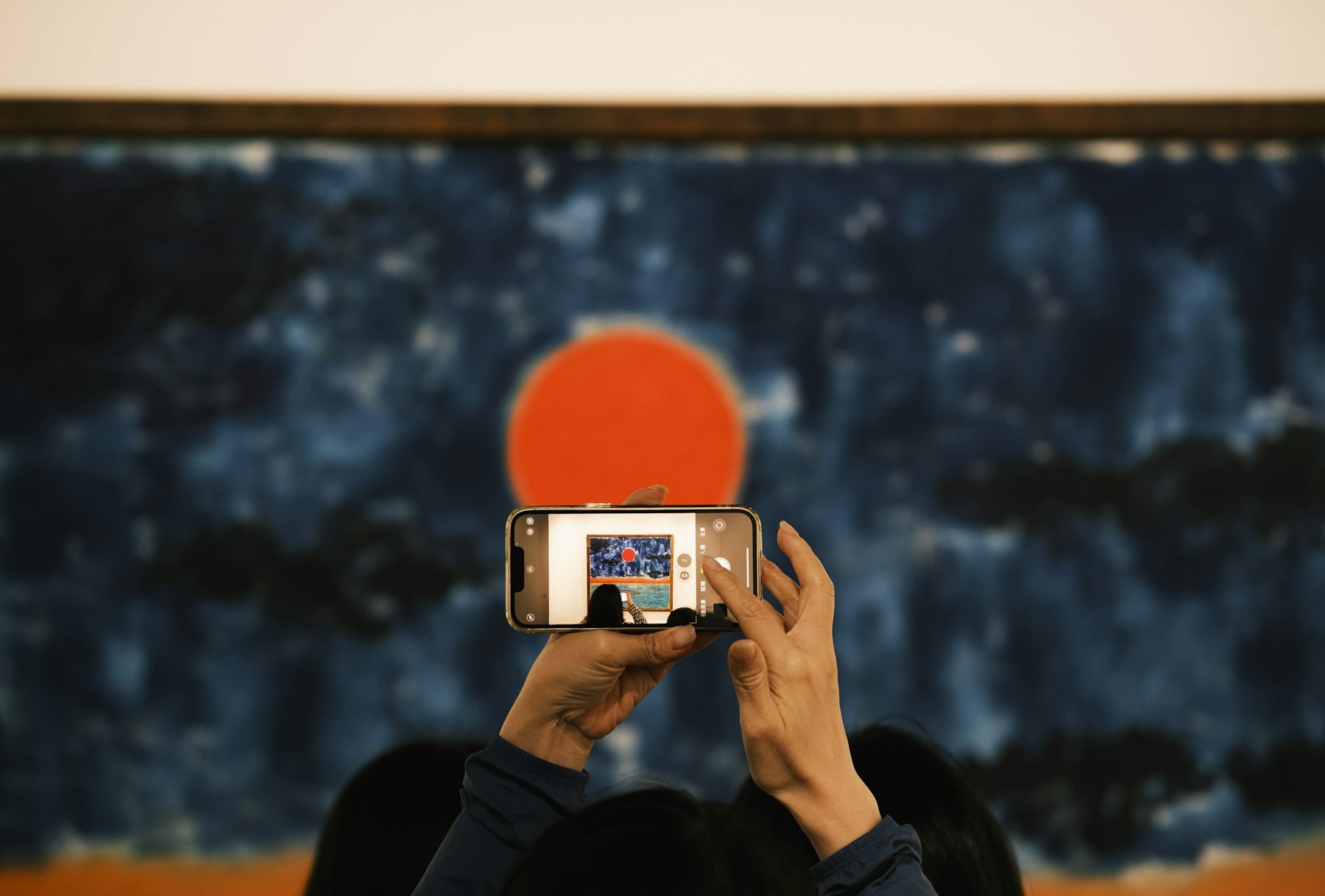
“I already have Instagram. Do I really need a website too?” It’s the question we hear most. The honest answer: they do different jobs. Instagram is where people find you, and your website is where they decide to hire you or buy from you. Here’s what each one is good at, and how to make them work together without doubling your workload.
The short version
- Instagram is a shop window on a busy street. Lots of people walk past, but most keep walking.
- A portfolio website is the gallery itself: calm, organised, and yours.
- You don’t have to choose. Post on Instagram to be found, and send everyone to your website to see the work properly and get in touch.
- A simple portfolio takes an afternoon to set up and a few minutes a month to keep up to date.
What Instagram is good at
Let’s give Instagram its due. For many artists it’s been the single best way to be discovered, and it still has real strengths:
- Reach. A post can travel far beyond the people who already know you, through hashtags, shares and recommendations.
- Process and personality. Stories and reels are perfect for studio days, works in progress and the person behind the work. People buy from people.
- Community. Other artists, curators, shops and collectors are there, and a friendly comment can turn into a group show or a commission.
- It’s free, and you already know how to use it.
If you’re getting commissions through Instagram, keep doing what works. The point isn’t to leave. It’s to stop relying on it for everything.
Where Instagram falls short
Instagram is built to keep people scrolling, not to help them look carefully at your work. That creates a few problems:
Your work gets cropped and squeezed
Your profile grid crops every image into the same shape. A long horizontal landscape or a tall portrait loses its edges, and a painting that works at a metre wide gets shown at the size of a postage stamp.
It’s organised by date, not by meaning
Your best series from two years ago is buried under 300 newer posts. A gallery owner who wants to see “the ceramics” or “the commissioned portraits” has to scroll and guess. Most won’t.
You’re next to everything else
Ads, suggested posts and other artists’ work are always one swipe away. On Instagram you’re competing for attention even on your own profile.
You don’t control it
The algorithm changes, reach goes up and down, accounts get hacked or wrongly suspended, and the rules about what you can post and how your images are used are set by Meta, not you. Meta also uses public posts to train its AI models. Years of work and followers can depend on one company’s decisions.
It doesn’t look like a professional reply
When a gallery, an art director, a grant committee or a school asks for your portfolio, an Instagram handle can feel casual. Many applications ask for a website outright.
What a portfolio website does better
- Your work, uncropped and big. Every piece in its real proportions, sharp on any screen.
- Organised the way you think. Series, projects and collections, in the order you choose, with your best work first.
- Room for context. Titles, sizes, materials, a short story behind each piece, your CV and an About page.
- No distractions. No ads, no suggested accounts. Just you.
- Easy to get in touch. A contact form that lands in your inbox, instead of a DM that gets lost in “requests”.
- Found on Google. When someone searches your name, your website is the result you want them to find. People also find it through searches like “botanical illustrator in Lisbon”.
- It’s yours. Especially with your own domain name, your address stays the same whatever happens to any app.
Side by side
| Portfolio website | ||
|---|---|---|
| Best for | Being discovered, showing process | Being taken seriously, getting hired or bought |
| How work is shown | Cropped grid, newest first | Full size, in series, best first |
| Context | A caption | Titles, details, About, CV |
| Distractions | Ads and other accounts | None |
| Who’s in control | Meta | You |
| Found on Google | Sometimes | Yes, for your name and your work |
| Cost | Free | Free to about $6 a month |
| Time | Constant posting | An afternoon to set up, then a few minutes a month |
How to use both without doubling the work
The trick is to give each one a clear job. Instagram brings people in, and your website is where they end up.
- Put your website in your Instagram bio. Not a link-in-bio page with twelve buttons. Just your portfolio. If you need more than one link, make your website the first.
- Post often on Instagram, and update your website every few months. Instagram is your sketchbook and diary. The website is the edited show. Only your best pieces make it there.
- Mention the website when it helps. “The full series is on my website” or “Details and sizes on my site” gives people a reason to click.
- Use the same photos. The careful, straight, colour-checked photos you take for your website (here’s how to take them with a phone) look great on Instagram too.
- Send serious enquiries to your website. When a gallery or client asks, reply with your website link. It shows everything at its best, in one place.
A quiet benefit: once you have a website, Instagram stops feeling like a test you can fail. A post that flops doesn’t matter much when your real portfolio is safe somewhere else.
If you only have time for one
If you’re building an audience from zero and want to share your process, start with Instagram. It’s where people discover new artists.
But if people already come to you, through word of mouth, applications, galleries or clients, then a website matters more. It’s what they check before they say yes. And it doesn’t need to be a big project. Our guide to making a portfolio website walks you through it in five steps, and many artists are done in an afternoon.
Keep Instagram for being found. Build a website for being chosen.