An art portfolio is a small, deliberate selection of your work, presented so that someone else can decide something: an admissions panel whether to offer you a place, a gallery whether to show you, a buyer whether to get in touch. The work matters most, but the choices around it (what goes in, in what order, how it’s photographed and labelled) are what make a portfolio convincing. Here’s how to make each of them.
The short version
- Find out who it’s for and what they ask for. Follow their rules exactly.
- Choose 10 to 20 pieces that belong together. Strongest and most recent first.
- Photograph everything properly, square on, in soft daylight.
- Give every piece a title, year, medium and size.
- Order the work like a short exhibition: open strong, end strong.
- Add a short statement and a way to reach you, then put it online.
Start with who it’s for
The same paintings can make a weak portfolio or a strong one depending on who’s looking. Before you choose anything, write down who will see it and what they need to decide.
| Who’s looking | What they want to see |
|---|---|
| Art school admissions | How you think and develop: range, observation, experiments, sketchbooks and finished work. |
| Galleries and curators | A consistent, recent body of work with a clear idea behind it, and evidence that you keep making it. |
| Buyers and collectors | The work at its best, sizes and prices or availability, and how to buy or commission. |
| Clients and art directors | The kind of work they’d commission, in context, and that you can deliver on a brief. |
If you’re applying somewhere, read their portfolio guidelines twice. Schools and open calls often set the number of pieces, file sizes and formats. A beautiful portfolio that ignores the rules can be set aside before anyone looks at it.
Choose the work
This is the hardest part, and the one that makes the biggest difference. A portfolio is judged by its weakest piece, not its average.
- Lay everything out. Print small photos of every candidate or put them side by side on screen. Seeing them together shows what belongs.
- Aim for 10 to 20 pieces. Fewer if your work is large or slow; more only if a school asks for it.
- Keep what belongs together. Look for a thread, a subject, a material, a question you keep coming back to. Five related paintings say more than ten unrelated ones.
- Recent over old. Show where you are now. Older work can go in its own series, or stay out.
- When in doubt, leave it out. If you hesitate over a piece, it’s not one of your best.
Ask someone else. You’re attached to pieces for reasons a viewer can’t see: how hard they were, what they meant. Show your long list to a teacher, a friend with a good eye or another artist, and ask which five they’d keep.
Photograph it well
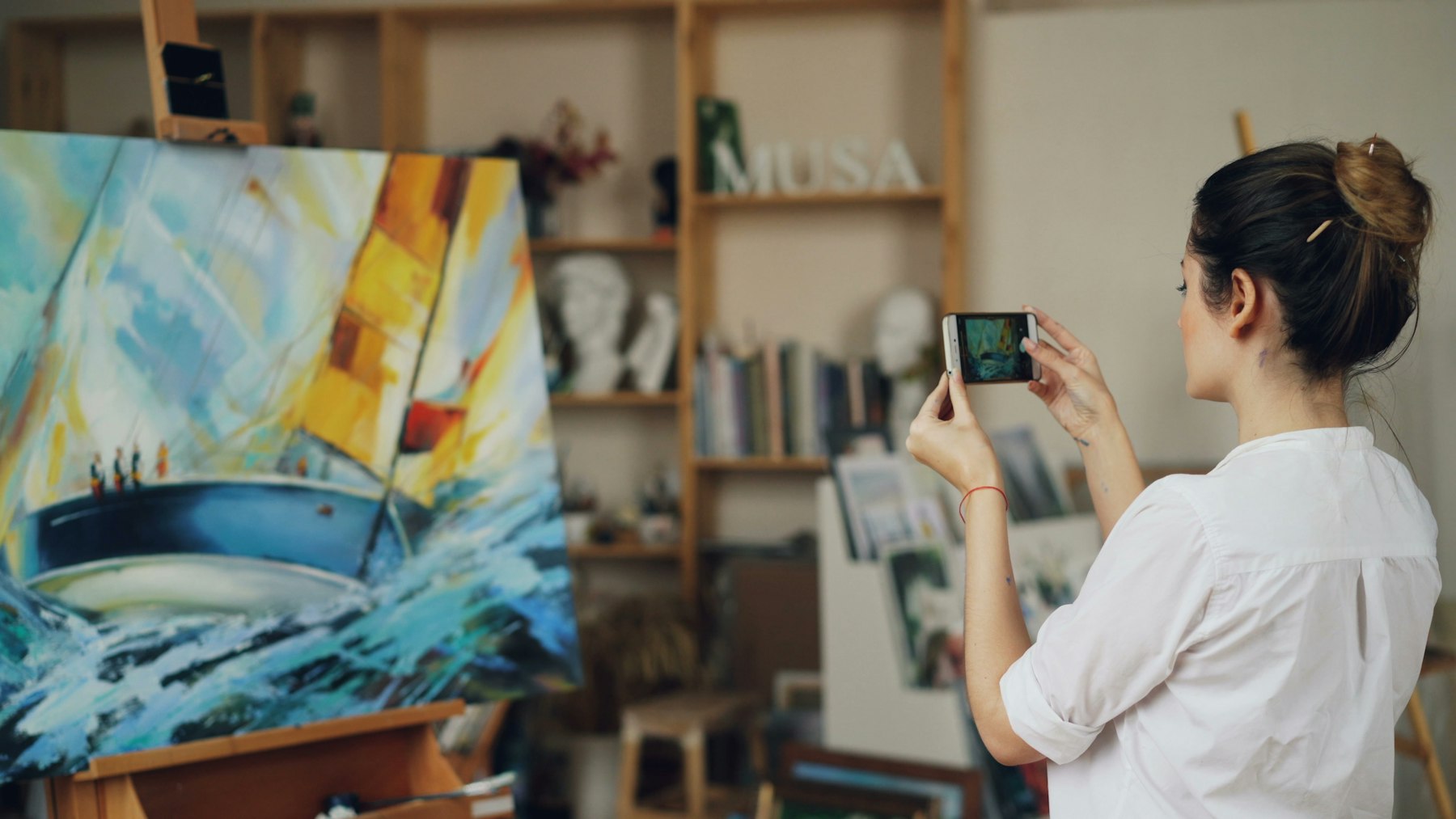
Most people will only ever see your work on a screen, so the photograph is the work for them. A great painting in a yellow, skewed photo looks like a mediocre painting.
- Shoot in soft, even daylight: a big window on an overcast day, room lights off.
- Hold the camera square to the work, centred, and a couple of steps back with a little zoom so the edges stay straight.
- Crop to the edge of the work. No easel, floor or thumbs.
- Compare the colours on screen with the real piece and correct the white balance.
- For sculpture, installation and textiles, add a detail shot and one view that shows the scale.
A phone is enough. We wrote a full, step-by-step guide on how to photograph your artwork with a phone.
Label every piece
Give every work the information a gallery wall label would: title, year, medium and size, for example Protea, After Fire, 2026, oil on linen, 60 × 80 cm. Add a sentence of context only when it helps someone see the work.
Labels do three jobs at once: they make you look professional, they answer a buyer’s first questions, and they’re the text search engines read, so the page can be found when someone searches your name or your subject.
Put it in order
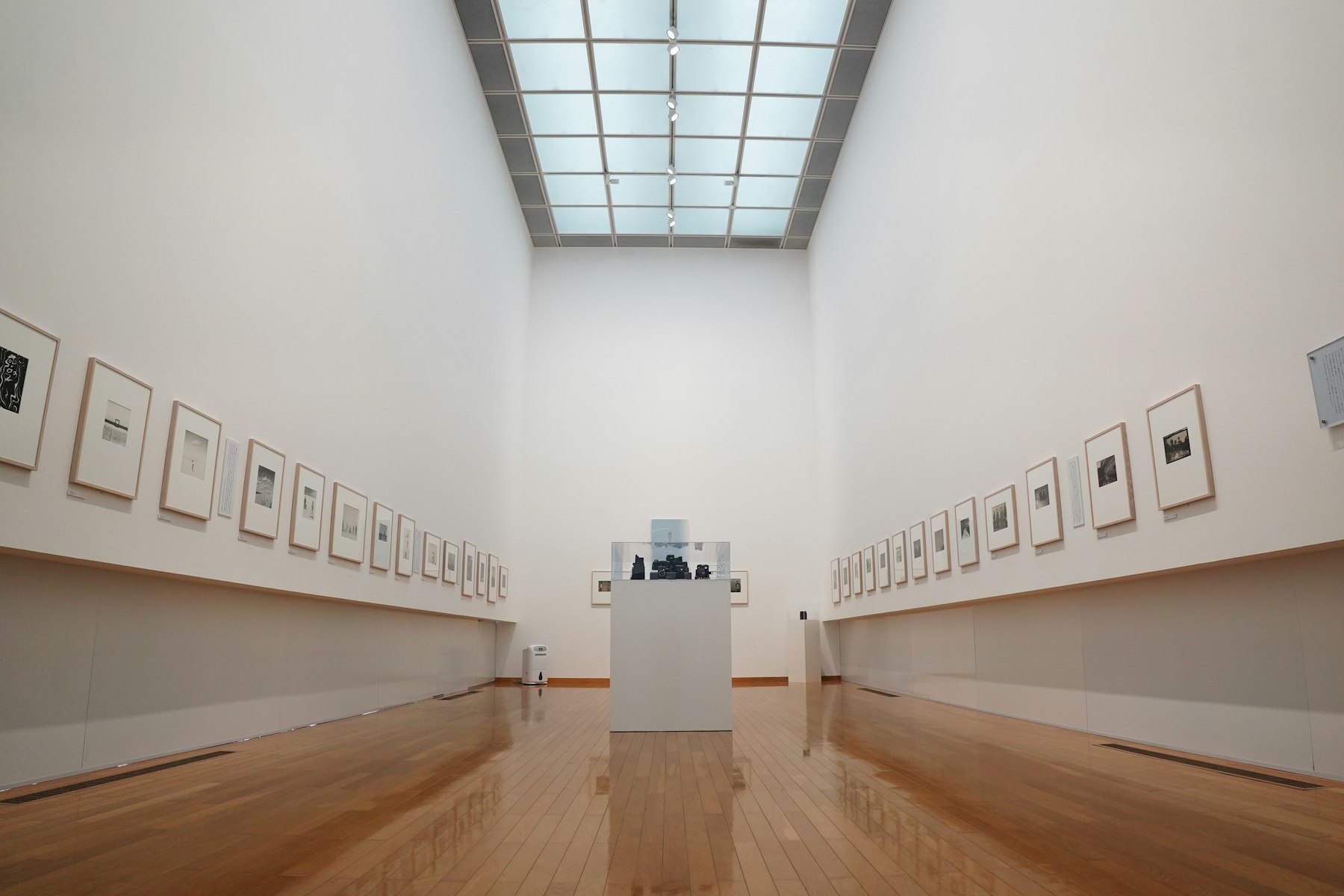
Think of the portfolio as a very small exhibition that people walk through in a minute or two.
- Open with your strongest piece. Many people won’t go past the first few.
- Group related work. Keep a series together, so the viewer sees the idea develop.
- Vary the rhythm. Alternate large and small, busy and quiet, colour and black and white, so each piece has room.
- End with something memorable. Your second-strongest piece often works best last.
The words: statement, bio, CV
Keep the writing short and plain. Nobody has ever been won over by a long artist statement.
- Statement: three to five sentences on what you make and why, in your own voice. If you have distinct series, give each its own two or three sentences instead.
- Bio: a short paragraph in the third person: where you’re based, your medium, your training if relevant.
- CV: exhibitions, residencies, awards, publications and collections, newest first. Leave it out if it’s empty; a short true CV is fine.
- Contact: an email address or form, and your gallery or agent if you have one.
Website, PDF or physical?
You will probably need more than one format. They share the same selection and the same photographs, so do the work once.
| Format | Best for | Tips |
|---|---|---|
| Website | Being found, sharing one link, galleries and buyers | Your own domain, work on the first screen, contact on every page. |
| Applications, open calls, emails to galleries | One piece per page, labels under each image, under 10 MB unless told otherwise. | |
| Physical | Interviews, reviews, studio visits | Good prints in a clean folder or case, same order as the website. |
A website is the one that keeps working for you when you’re not in the room. It doesn’t need to be a big project: see how to make a portfolio website, or look at some art portfolio examples first.
If it’s for art school
Admissions portfolios are a different animal. Panels are looking for potential, not a finished career.
- Show observational drawing. Most schools want to see that you can draw from life, even if your finished work is abstract or digital.
- Show process. Sketchbook pages, studies and failed attempts show how you think. Include a few, labelled as process.
- Show range, then depth. A few different media, and at least one idea you’ve explored across several pieces.
- Make it yours. Work from your own ideas and life beats copies of other artists or class exercises everyone did.
- Follow the brief. Number of pieces, sizes, file formats and deadlines vary a lot between schools and programmes.
Checklist before you send it
| Check | Why |
|---|---|
| Every piece earns its place | The weakest piece sets the level. |
| Photos are straight, sharp and true to colour | On screen, the photo is the work. |
| Every piece has title, year, medium and size | It’s what galleries and buyers ask first. |
| Strongest work first and last | Most people only see the start. |
| Statement under 100 words | Short gets read; long gets skipped. |
| Your name and contact on every page | Make the next step obvious. |
| Someone else has looked at it | You can’t see your own blind spots. |
A good art portfolio is mostly editing: fewer pieces, better photographed, in an order that makes sense. Get that right and the format almost takes care of itself.